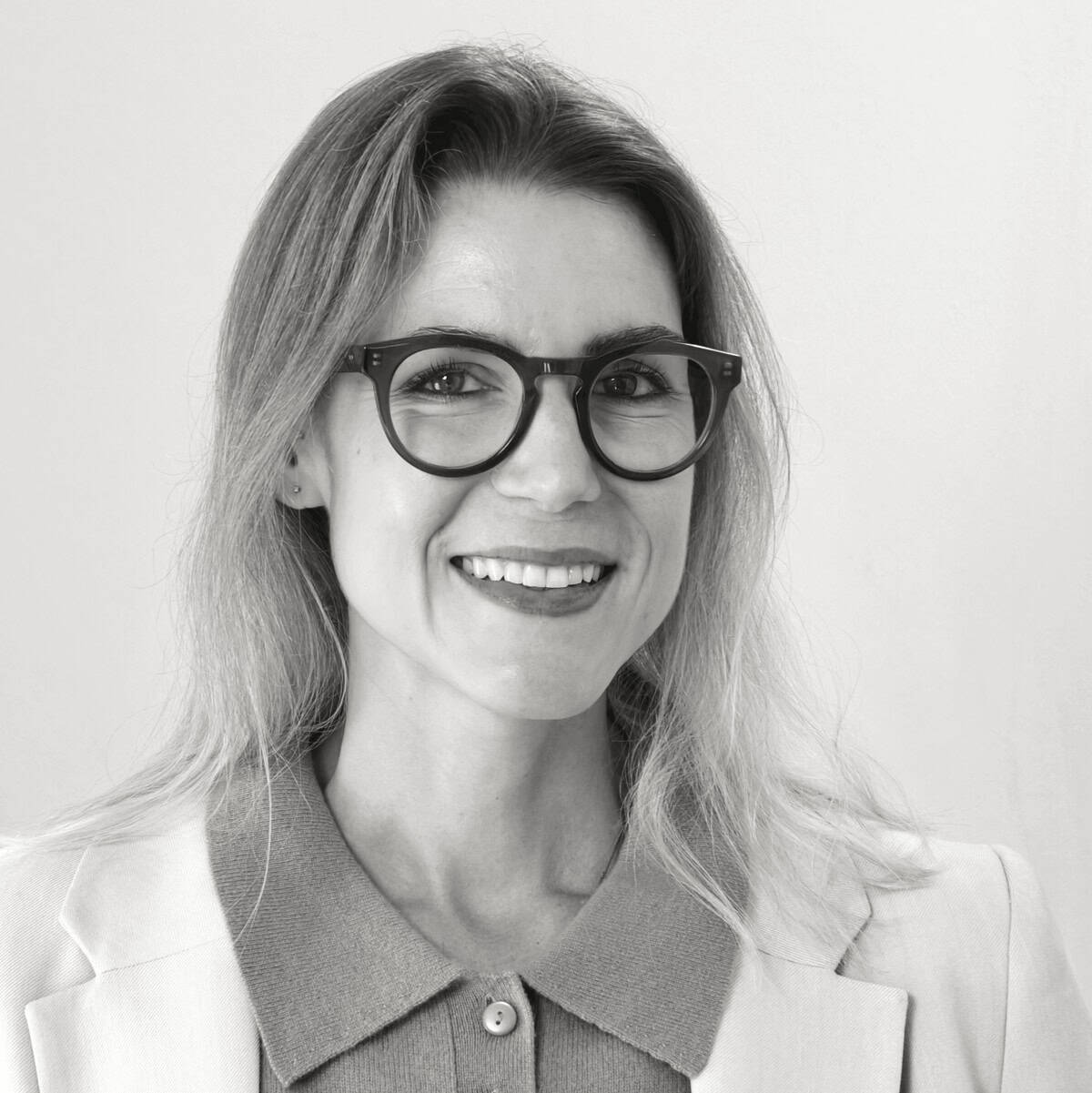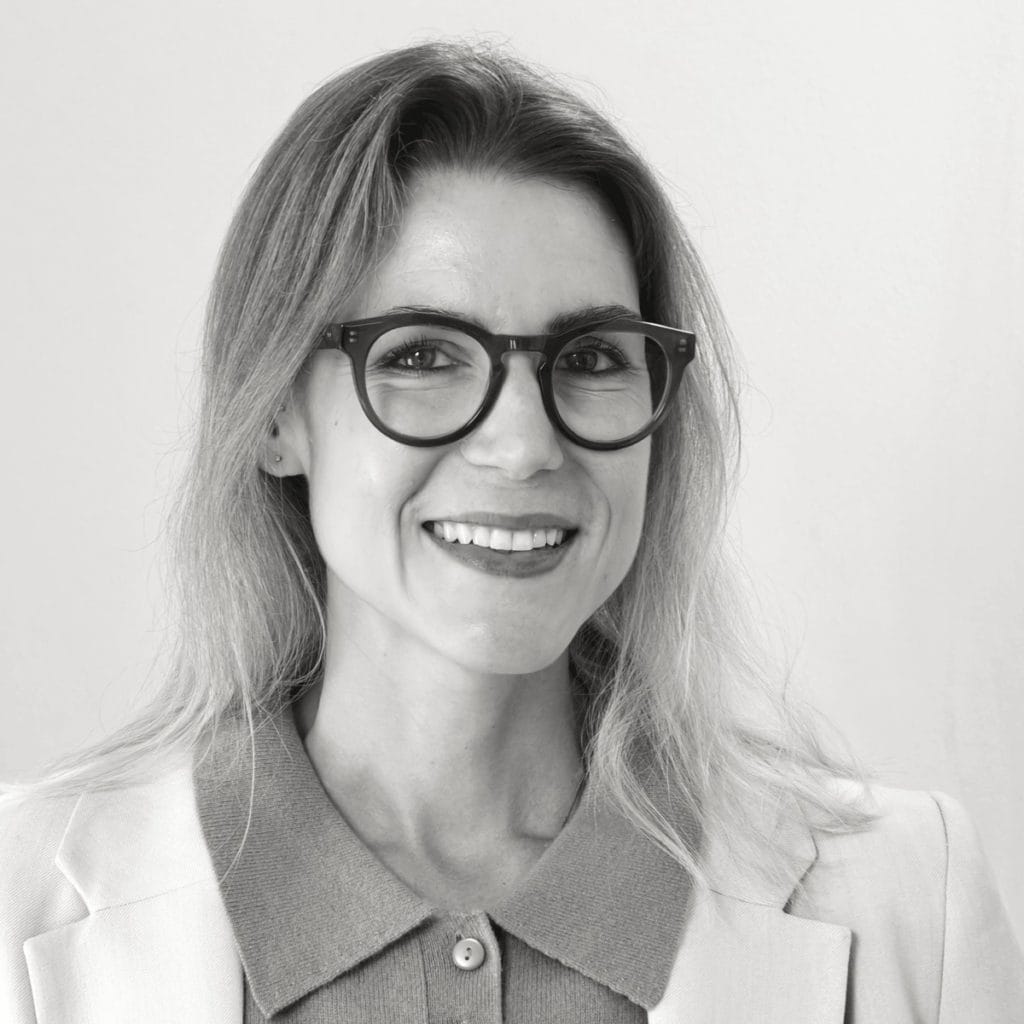
Every month we ask one individual in our network a few questions about their way into tech, their motivation and their lessons learned.
Let’s start from the beginning. Tell us about where you’re from!
I grew up in Central Switzerland in a warm, adventurous environment. My family has always been my anchor. Our home was shaped by a special curiosity about the world and a deep love for nature, travel and sports. What makes my family truly special is that they have always supported me unconditionally on my path, even when my decisions and my non-linear career journey were not easy to understand for them. That foundational trust gave me the courage to explore new horizons instead of squeezing myself into a pre-made box.
I studied Multimedia Engineering at the University of Applied Sciences of the Grisons (FHGR), completed a CAS in Digital Communication Excellence and pursued targeted further education in Change Management and AI. Over the years, I also worked as a freelancer. This exposed me to a wide variety of clients, projects and complex problems, which helped me sharpen my mind and perspective. Today, I live in Zurich Altstetten and work in Zug.
What valuable advice did you get from your parents?
My dad didn’t just give advice with words, he lived it. Day by day. Growing up, he shared his love and determination for the mountains, sports and technology. He sparked my curiosity to stay open to the world. On the 45 four-thousand-meter peaks he climbed and in everyday life, he taught me not to give up when things get steep and difficult. He showed us that true strength doesn’t have to be loud, it shows in perseverance. You work toward a goal step by step, staying grounded and humble along the way. And he taught me that sport helps in almost every situation in life: not because it magically makes problems disappear, but because it clears the mind, tires the legs and opens the heart again.
How did you become interested in tech?
My path into tech was anything but traditional and that exact variety shaped my fascination. Early on, I had the opportunity to work with the Swiss Air Force in the Drone Command. Later, during my studies, I gained insights into the world of enterprise software at SAP. Standing in these male-dominated, technical environments taught me something crucial early on: you don’t have to be the person writing the deepest code to add value. There, as well as in my later roles in digital media, I realized that…
Stepping into that gap as a bridge builder is what pulled me into the tech world.
What does being a bridge builder between technology, business and people mean to you in practice?
In practice, it means standing right in the middle of a fun crossfire, which I love because all three sides fascinate me. Developers often speak in system architectures and code, business leaders think in KPIs, budgets and strategy and users simply want tools that make their daily lives easier without giving them a bad day and a headache. If these three groups talk past each other, even the best project fails.
Luckily I am curious about all three worlds, I can step into that triangle, listen between the lines and translate their needs so everyone actually understands each other. It is about getting the information flowing, taking away the fear of the unknown and turning three separate perspectives into one shared mission. It sounds so easy. Honestly it is not always. Sometimes it takes a lot of patience but when it finally clicks between people. It is such a good feeling and the best reward for my work.
What would you say to someone in tech who feels they need to have their entire career mapped out before they can take the next step?
We are often so focused on achieving the next big milestone and only see that future version of ourselves who made it. Why don’t we appreciate and enjoy the actual way there? With maybe all the frayed nerves, the hard lessons learned, hopefully a lot of good moments and the inspiring people we meet and talk to on the way. Just take the next step that sparks your curiosity. For me, it is just like hiking. It helps me to enjoy the path and be more in the moment.
Your own career path has taken some unexpected turns. How did the opportunity to work with the Swiss Air Force’s Drone Command come about?
I was working as Cabin Crew Member at SWISS International Airlines and wanted to enjoy that lifestyle for a few more years. During that time, I developed severe middle ear infections and my eardrum burst several times. I even had tiny tubes fitted to help me equalize the pressure without being in constant pain, something normally only used for babies.
Eventually, the doctors told me I had to quit flying, otherwise I would end up deaf. Just like that, my dream of one day getting my pilot’s license was shattered into a thousand pieces. During my grounding, I worked in Technical Purchasing at SWISS for a few months. Then one day, my Dad sent me a job vacancy as Assistant to the Commander of the Drone Command in Emmen/LU. I was immediately hooked. I sent in my application, they wanted me and the rest is history. 😉
What excites you most about the future of AI?
I truly believe that AI gives us the chance to automate repetitive and boring routines so we have more time for what makes us more human: empathy, creative problem-solving and a true connection. If we approach AI with responsibility and clear values, it won’t make our work and world colder. In the end, it will make it more human.
Why do you think diversity in tech is so important?
Have you ever had a role model that inspired you on your path?
Along the way, I have met some inspiring souls. I try to learn something from every connection I make. I ask questions. And try to understand other perspectives. But, well, honestly, I have learned the most during the darker moments. The North Star who shaped me in a special way was my Dad. Looking back, I see that his career is the blueprint for how I approach technology and change today. He worked as a mechanical engineer at Victorinox for over 40 years and created nearly 10,000 technical drawings. During that time, he experienced the full digital transformation of his craft, transitioning from analog drawing boards to early CAD systems and finally to modern 3D software. He remained precise, curious and eager to learn until the end of his life, even obtaining his scuba diving license at the age of 60. Even after retiring, he led public factory tours with passion, translating complex engineering into engaging stories full of heart and humor. His commitment to uncompromising quality, lifelong learning and making complex tech accessible is exactly what inspires my work day by day.
What aspects of your work are you proudest of?
I feel most proud when I can act as a bridge builder between people, businesses and tech. During digital projects or AI integrations, it’s all too easy to get lost in technical jargon or pure metrics.
Outside of work, I mentor a young student in the SATW’s national funding programme, which aims to strengthen women’s role in technology and IT in Switzerland. Offering encouragement, lending an open ear and watching her grow in confidence is one of the most rewarding things I do.
What drives you at work?
Purposeful digitalization that serves people. I’m currently working on a sovereign AI project that is being rolled out across the City of Zug, the municipalities and schools throughout the canton. The solution is designed to meet data protection requirements and tailored to the needs of different user groups. Our major USP here is digital sovereignty: unlike regular chatbots such as ChatGPT or Claude, we provide our LLM based on open-source models. We do not train any models with user inputs and all data is hosted securely in Switzerland.
In addition, I proactively push and coordinate the intercantonal exchange with other cantons that are also introducing AI. The goal is to share experiences, build synergies, jointly define requirements for interface partners and inspire one another along the way. Ultimately, we want the very best for our employees: helping them become more efficient in their daily work while ensuring that innovation and lifelong learning do not intimidate them, but rather invite them to stay curious and open.
What has been your toughest challenge you faced while working in tech?
I think that the toughest challenge in tech is rarely tech itself, it is the cultural change around it. I have seen projects where brilliant technical solutions were built without bringing the people along. Breaking down silos, overcoming resistance to change and creating genuine understanding between developers, business stakeholders and users takes a lot of patience and empathy.
Because I care about quality, stand by my word and want to move things forward, my personal challenge in those moments is pacing myself. When you put your whole heart into your work, it is easy to take on too much. In such a fast-moving industry, I have had to learn that you cannot carry every transformation on your own shoulders and that sustainable change is a marathon, not a sprint. 😉 Even today, I have moments where I feel overwhelmed or wonder if I am doing enough. Learning to be as empathetic with myself as I am with people is an ongoing journey.
Do you have a favorite book or podcast?
I love feeding my curiosity across different fields, so my playlist is a mix of tech, finance, leadership, psychology, and society. To stay up to date on the markets, I regularly listen to financial podcasts.
My favorite tech podcast is the “Doppelgänger Tech Talk” by Philipp Glöckler and Philipp Klöckner. Twice a week, they call each other to discuss current events around relevant tech companies in a way that is the perfect mix of market updates, fun and education.
For personal growth and leadership, I listen to older episodes of Brené Brown.
“Lanz & Precht” is also a must on my list for broader societal debates.
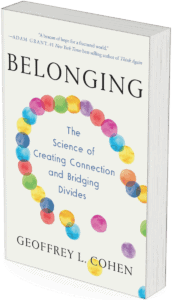
As for books, my favorite one is “Nexus” by Yuval Noah Harari. It brilliantly connects the history of information networks with the current AI revolution and asks the crucial question of what this means for us as human beings.
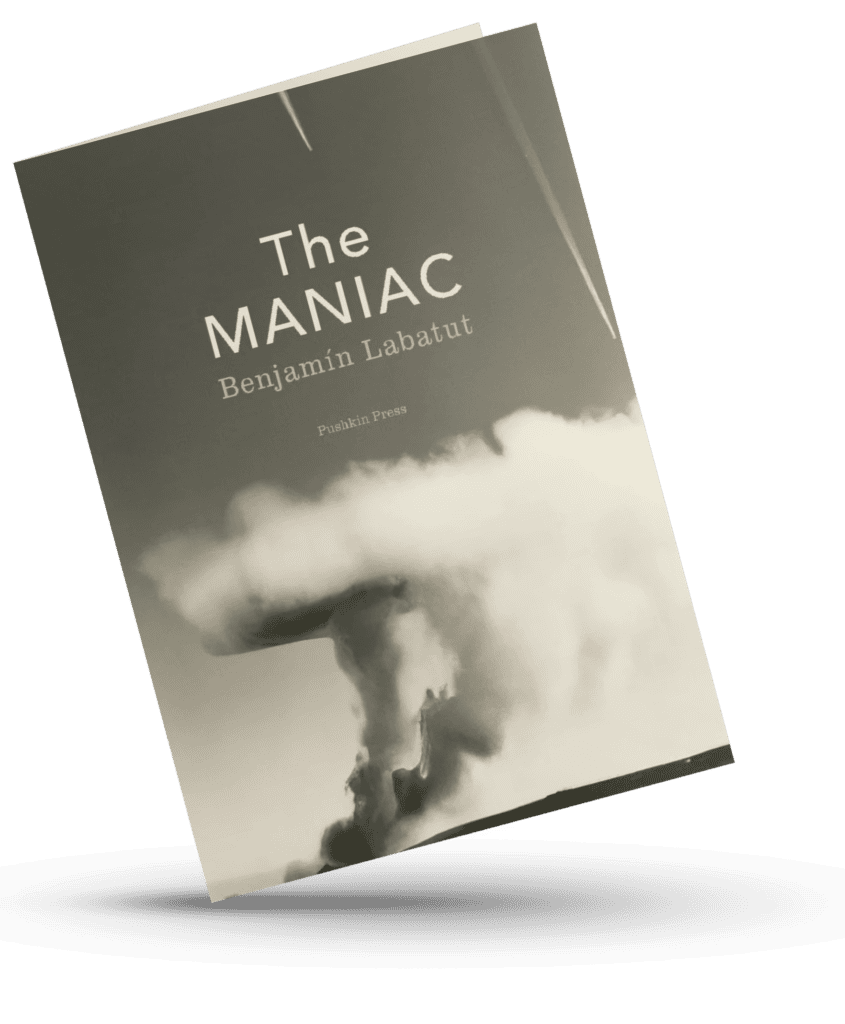
Right now, I am reading “The MANIAC” by Benjamín Labatut, a fascinating chronicle about the limitations of human understanding, the rise of nuclear physics and the birth of AI.
What advice would you give other women in tech?
Be kind, stay authentic and own your space. Don’t feel like you have to adopt a certain persona or become “one of the boyz” just to fit into a traditionally male-dominated area. Your combination of analytical thinking, empathy and communication is not just a “soft skill”, it is a massive strategic advantage.
(And if you ever need a hug, call me.) Finally: Never be afraid to ask the “simple” questions in a room full of experts. Asking “Why are we building this and how does it actually help the user?” is often the smartest question in the room…
And what advice would you give women not yet working in tech that want to enter the field?
Don’t wait until you think you know how to code or understand every technical detail. And please, stop waiting until you tick 100% of the boxes on a job description! The tech industry desperately needs female bridge builders. Whether your background is in communication, psychology, project management, HR, or design: tech companies need women who understand human behavior, who can guide change, manage stakeholders and translate between developers and users. Digital transformation is in the end about people. Everything you have learned outside of tech is not a detour, it is your superpower.
Here is a secret: nobody has it all figured out, especially now with AI changing the rules almost every day. We are all learners. Bring your full self and your existing strengths into it and trust your ability to learn the rest along the way. I did that, you can do it too.