
WST Role Model; Patricia Bleiker; Women in Tech;
red_WST_logo

Role Model:
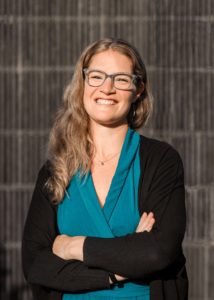
Patricia Bleiker

Role Model:
Patricia Bleiker

Every month we ask one individual in our network a few questions about their way into tech, their motivation and their lessons learned.

Let’s start from the beginning. Tell us about where you’re from!

I was born and raised in Thalwil, a small town near Zurich, together with my older sister and younger brother, the classic sandwich child. My childhood was very outdoorsy: climbing trees, swimming in the lake, exploring the woods, and doing lots of sports like gymnastics, volleyball, swimming, and orienteering. Music was also a big part of my life, I played piano and trombone and loved singing.

In high school I chose to focus on languages, especially Spanish and Latin. Even though mathematics and natural sciences came more naturally to me, I was curious about languages and already sensed how important communication skills would be later in life.

For a while I considered very different paths: from medicine to musical theatre. In the end I decided to study electrical engineering at ETH Zurich, mostly because the biomedical engineering specialization sounded exciting. I have to admit I started quite naively: when I first saw “C++” on the schedule, I actually thought it was the lecture hall number!

What got me through those challenging early ETH years was the incredible group of friends I met – helped, I suspect, by my social and drink-mixing skills. An internship at Swisscom later gave me the confidence to keep going, and I finished my Master’s while already working part-time as an associate product manager at Swisscom and gaining real-world experience.

What valuable advice did you get from your parents?

Two things shaped me a lot growing up: trust and the power of simply doing things.

My parents gave me a lot of freedom and trusted me to make my own choices. That meant I could try many different activities and hobbies — and also make plenty of mistakes along the way. I realize now that this kind of trust is not always easy for parents, because it means watching your children struggle sometimes without stepping in.

But it gave me a strong sense of self-efficacy early on. I learned that I can influence situations, change things, and learn by actually experiencing them instead of overthinking everything beforehand. At the same time, this freedom came with responsibility: Understanding that choices have consequences and that you have to own them.

This balance between thinking and doing still shapes how I approach work and new challenges today. It allows me to step into new projects with curiosity and a healthy appetite for risk: Confident enough to try things out, but mindful enough not to be reckless.
WST Role Model; Patricia Bleiker; Women in Tech;
Patricia Bleiker
GTM Point

How did you become interested in tech?

I think my interest in technology started quite early. As a kid, I could spend hours building with LEGO Technic or creating my own constructions. I also loved visiting places like Technorama in Winterthur or the Tinguely Museum in Basel. I was always fascinated by machines, movement, and the creativity behind technical systems.

Later on, what really captured my interest was technology that interacts with humans. Discovering the field of biomedical engineering made me realize how powerful technology can be when it directly improves people’s lives. That curiosity led me to study electrical engineering at ETH Zurich and eventually work on signal processing for hearing aids and cochlear implants during my master’s thesis.

Over time, I realized that I’m actually most fascinated not by the technology itself, but by its application and impact. Technologies like cybersecurity or AI are exciting because of what they enable: Protecting people and systems, or improving efficiency and quality in many use cases. What motivates me today is understanding where new technologies create real value and how that value can be translated into viable products and business models.

Looking back on your career so far, what has driven you the most – deepening your technical expertise, pursuing your personal interests, or creating meaningful impact – and in what ways have your hard skills helped you follow that path?

Looking back, what has driven me most is a combination of curiosity and creating meaningful impact, and interestingly, both are closely connected.

My curiosity started very early, from building LEGO constructions and ball tracks to later diving into topics like electromagnetism, semiconductors, and acoustics during my studies. Today, that curiosity continues across areas like cybersecurity, robotics, and IT management software. I enjoy understanding how things work at their core.

At the same time, I realized that what truly excites me is what I would call “matchmaking”, identifying where technology, market needs, and people fit together. Whether it’s spotting a strong product–market fit, connecting someone to the right job, or bringing the right people together, I genuinely enjoy recognizing these patterns, and I especially enjoy when those predictions turn out right.

My hard skills have been a strong enabler for that. Having a solid technical foundation, from IT infrastructure and distributed systems to cybersecurity and basic programming, allows me to quickly understand architectures and distinguish real value from hype. Combined with a fast perception and the habit of building mental models (often sketched out on my iPad), I can structure complex problems quickly.

And maybe most importantly, I have a certain endurance: as long as I feel like “there’s something to figure out here,” I keep going. That combination of curiosity, technical grounding, and persistence is what allows me to connect the dots between technology and real-world impact.

Based on your journey, what have you learned about the importance of diversity in tech and innovation, and how has it shaped the way you approach your work and collaborate with others? What advice would you share?

One of the biggest lessons I’ve learned is that we’ve historically overestimated the importance of technology alone.

In the past, building technology was expensive and required highly specialized skills. Today, with increasing computing power and AI, it has become much easier to build prototypes and bring products to market. As a result, the real differentiator is shifting: understanding market demand and creating something people truly need is becoming more important than ever.

This is where…

Diversity plays a critical role. You can’t assume that everyone thinks like you or has the same needs. Different industries, regions, and user groups have very different problems, and if you don’t understand those differences, it’s almost impossible to build successful products.
WST Role Model; Patricia Bleiker; Women in Tech;
Patricia Bleiker
GTM Point

For me, this has fundamentally shaped how I work. I try to actively collaborate with people from different functions, sales, product, marketing, customer success, as well as people with different backgrounds, experiences, and perspectives. It can sometimes be more time-consuming and even challenging, but it leads to much better decisions because it reduces blind spots and biases.

My advice would be: treat diversity as a practical tool, not just a principle. Actively seek out perspectives that differ from your own. Sometimes it even helps to consciously take on a different role or argue from a completely different standpoint, just to stress-test your thinking. In the end, the more perspectives you integrate, the higher your chances of building something that truly resonates with the market.
WST Role Model; Patricia Bleiker; Women in Tech;
Patricia Bleiker
GTM Point

Have you ever had a role model that inspired you on your path?

I never really had one single idol or iconic role model. Instead, there were different people in my life who inspired me in different ways.

When I was a teenager, my singing teacher was a huge inspiration. At that time, she was one of the few women I knew who consciously designed her life outside of the traditional expectations. She didn’t have children and instead built a life around music, teaching, and traveling. She lived on the Uetliberg, toured in South America, and gave workshops in places like Berlin and Barcelona. What impressed me most was how happy and fulfilled she seemed – it was very empowering to see someone confidently choosing an unconventional path. Even today, I still feel inspired whenever I see her or sing with her.

Another person who influenced me a lot was my grandmother. She had a very natural authority: she didn’t need harsh words or a loud voice to guide people. Instead, she led with calmness, humor, and a lot of warmth.

Watching how she influenced and inspired the people around her taught me that leadership doesn’t have to be loud, sometimes quiet confidence and authenticity are far more powerful.
WST Role Model; Patricia Bleiker; Women in Tech;
Patricia Bleiker
GTM Point

What aspects of your work are you proudest of?

What I’m most proud of are probably the principles that guide how I work.

One is what I like to call being a “pragmatic perfectionist.” I care deeply about quality and doing things well, but I’ve also learned that not everything needs to be perfect. Knowing when something truly needs to be on point and when “good enough” is good enough is incredibly powerful. For me, this balance has been key for both professional success and personal freedom.

Another aspect is the trust I have in my gut feeling. It’s not just intuition out of nowhere, it’s built on theory, experience, and quite a few failures along the way. Over time I’ve learned to constantly recalibrate it through reflection and learning. Today it’s one of my most valuable decision-making tools and probably what shapes me into what I’d call a realistic optimist.

And finally, I’m proud of my consistency. I have the curiosity and grit to keep going, even when things take time or get challenging.

Progress usually comes from sustained effort rather than one big breakthrough – and maintaining that effort is much easier when you approach it with curiosity and a healthy dose of humor.
WST Role Model; Patricia Bleiker; Women in Tech;
Patricia Bleiker
GTM Point

What drives you at work?

A big driver for me is learning something new. I enjoy learning from other people, especially on a meta-level: things like how to align different stakeholders, how to inspire a team, or how to make people believe in a business idea.

Closely related to that is the joy of seeing others learn something new. I’ve always enjoyed explaining complex topics in a way that makes them accessible. The moment when you see the realization in someone’s eyes, when something suddenly clicks, is incredibly rewarding and empowering.

I’m also very energized by teamwork. The best ideas rarely emerge in isolation. I love the process of building on each other’s thoughts – not just presenting ideas, but really understanding them, challenging them, and iterating together. When a discussion starts to feel like a creative ping-pong, that’s when I know we’re onto something.

And finally, I’m driven by turning plans into reality. Planning is important, but what I really enjoy is making a plan executable: Finding pragmatic or sometimes unconventional ways to overcome obstacles and reach a goal that might look ambitious, but is ultimately achievable.

What has been your toughest challenge you faced while working in tech?

One of the toughest challenges is the moment when you realize that a product idea has been overestimated compared to real market demand. Sometimes an entire organization is built around the theoretical potential of a technology: Teams are hired, investments are made, and strategies are developed assuming a large market opportunity.

But markets evolve. The momentum might have passed, or competitors may have introduced simpler solutions that are not technically superior but are “good enough” for customers. In those situations, even great technology can struggle if the benefits no longer justify the price or complexity required to support a large organization built around it.

Those moments are difficult because you know how much talent, effort, and passion went into the technology. They are also powerful reminders that innovation is not just about what is technically possible, but about what customers truly need and are willing to adopt.

Another challenge I sometimes observe is the divide between technical and non-technical teams. Engineers may underestimate the importance of functions like marketing or sales, while business teams may not fully appreciate the complexity of the technology.

Bridging that gap, building mutual respect and understanding, is essential, because truly successful tech products require both perspectives working together.
WST Role Model; Patricia Bleiker; Women in Tech;
Patricia Bleiker
GTM Point

What is the most important skill in your everyday work?

One of the most important skills in my daily work is stakeholder management.

Working in go-to-market means collaborating closely with many different functions: sales, marketing, product, customer success, and others. Each of these teams has different goals, incentives, and ways of thinking. A big part of my job is understanding these perspectives well enough that I can already anticipate how different stakeholders might react to a plan or strategy.

At the same time, when I see a promising product–market pairing, it’s important to translate that opportunity into aligned goals across departments. That means breaking down the overall strategy so that it also connects to the individual motivations and KPIs of the people involved.

In my experience, collaboration works best when you truly understand what drives each stakeholder and design plans that support both the shared objective and individual success metrics. When that alignment is achieved, teams move much faster, and the go-to-market motion becomes much more effective.

In my experience, collaboration works best when you truly understand what drives each stakeholder and design plans that support both the shared objective and individual success metrics. When that alignment is achieved, teams move much faster, and the go-to-market motion becomes much more effective. This is something I’m particularly passionate about, which is why I organized the GTM Summit 2026 on 5. May 2026: to bring together different perspectives and share practical ways to achieve this kind of cross-functional alignment.

Do you have a favorite book or podcast?

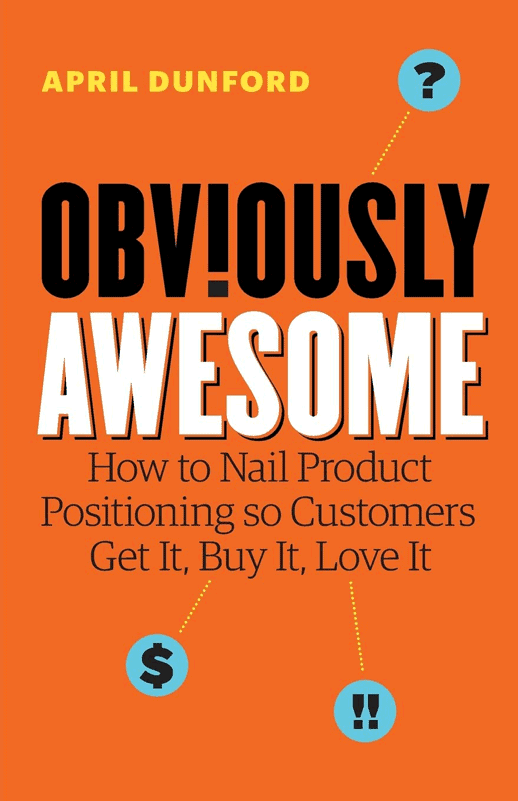
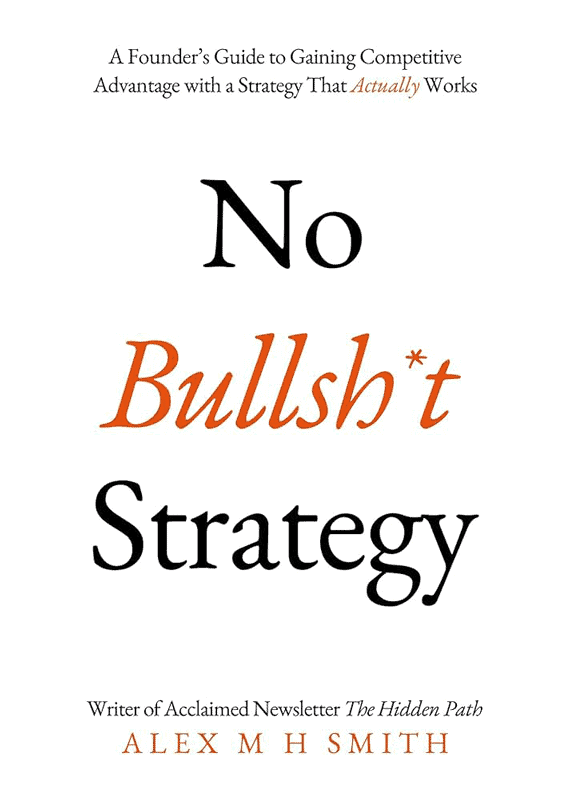
Two books I often recommend are “Obviously Awesome” by April Dunford and “No Bullshit Strategy” by Alex M. H. Smith.

Book Tip by WST Role Model Patricia Bleiker

Obviously Awesome” explains positioning in a very practical and hands-on way. For me, positioning is the bridge between technology and business. Even the most impressive technology won’t succeed if people don’t clearly understand why it matters and for whom it is built. That makes the book highly relevant for anyone working in a commercial tech environment.

Book Tip by WST Role Model Patricia Bleiker "Obvioudly Awesome"

No Bullshit Strategy” resonates with me because it strips strategy down to its essence: offering something that someone really needs, and doing it better than anyone else. I like the clarity and focus of that idea.

On the podcast side, I really enjoy “The Knowledge Project” by Shane Parrish. The conversations range from business and psychology to unexpected topics like wine, but the common theme is learning from people who have mastered their craft.

And then there’s “Drinnies” by Giulia Becker and Chris Sommer, which is a completely different category. It’s a hilarious podcast about the everyday life of introverts and the art of overthinking, and sometimes a great reminder not to take everything too seriously.

What advice would you give other women in tech?

One piece of advice I would give is: don’t assume you are fundamentally different just because you are a woman. Instead of focusing on the differences when working with men, try to notice the similarities.
WST Role Model; Patricia Bleiker; Women in Tech;
Patricia Bleiker
GTM Point

Over time I realized that many men experience the same things we often think are uniquely ours: Imposter syndrome, insecurity, moments of feeling overwhelmed by the speed of innovation, or simply feeling out of their depth. Recognizing that helped me create more genuine connections at work. When you allow space for being “just human,” it often brings out the best in everyone. Sometimes this simply means being the first person to share a small failure or insecurity, ideally with a bit of self-humor. It’s amazing how often that opens the door for others to say “me too.”

At the same time, it’s also important to recognize the advantages you may have as a woman and use them strategically. In some situations, staying calm and then addressing an issue very precisely can be far more powerful than competing with the loudest voice in the room.

And sometimes not fitting neatly into stereotypes, whether people expect you to be the “charming” one or the “iron lady”, can actually be a strength. Being able to move between those roles when needed can be incredibly powerful.
WST Role Model; Patricia Bleiker; Women in Tech;
Patricia Bleiker
GTM Point

And what advice would you give women not yet working in tech that want to enter the field?

First, try to understand the value you can bring to technology. Technology by itself rarely creates impact: It needs a real problem to solve and a market need to serve. In many cases, what makes or breaks a technology is not the engineering, but the understanding of the pain points, industries, and real-world use cases behind it.

That means people who understand markets, customers, communication, operations, or human behavior are incredibly valuable in tech companies. Roles in product management, marketing, sales, HR, operations, or customer success are all essential to turn technology into real products and businesses. Often, your experience as part of a target industry, or even as an everyday consumer, gives you insights that purely technical teams might not see. The key is being able to communicate these insights clearly and, ideally, quantify the value they represent.

My second advice is: experiment rather than overthink. Try to create small opportunities to explore the field. That could mean attending industry tech events, interviewing someone working in a role you find interesting, participating as a subject-matter expert for a product team, or even shadowing someone for a day. These kinds of experiences often teach you far more about the field, and where you might fit in, than endless research from your desk.

Tags

Like this article?

Spread the word and share this article on social media!

Imprint          Privacy Policy          © 2021 We Shape Tech

Job

Openings

Welcoming

Diversity

Our newsletter will keep you posted on featured openings. Sign-up now!

HSLU is looking for a "Python for Data Scientists" Lecturer

HSLU is looking for a "Big Data Tools" Lecturer

Crack the Confidence Gap | 28 June 2017

Get in touch to attract diverse talent!

This website uses cookies to ensure you get the best experience on our website. Please refer to our Privacy Policy for more information.

Join Your Fellow Shapers

Don't Miss a Thing

Sign up to receive our monthly newsletter and you’ll never miss an event or insightful article!

By signing-up you agree to our Privacy Policy.