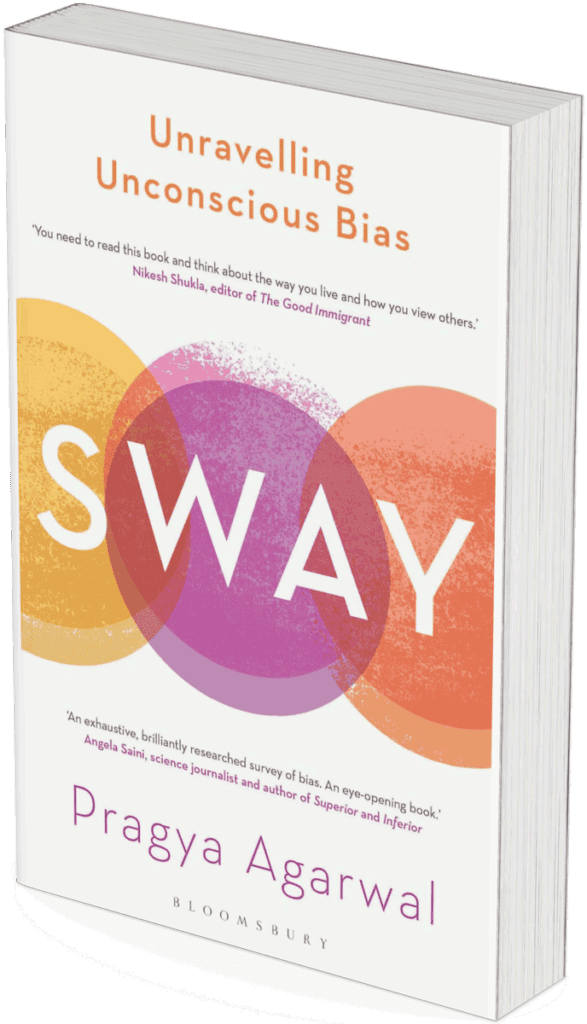

Unravelling Unconscious Bias
This book takes readers into the science and lived reality of unconscious bias (the automatic assumptions and snap judgements our brains make about people and situations without our intention) and explores how those impulses shape decisions in workplaces, families, communities and societies. Drawing on psychology, neuroscience and real-world studies, it explains where bias comes from (sometimes rooted in evolutionary survival instincts), how early in life it develops, and how it persists even in people committed to fairness.
Through a mix of empirical research and illustrative examples, the narrative considers a range of sensitive topics – from race and gender to age, beauty and language – showing not only how bias influences interpersonal interactions but also how it is woven into institutions, policies and norms. The book does not simply catalogue problems; it offers a framework for recognising bias in ourselves and others, questioning assumptions and making more conscious choices.
Clear explanations and varied cases help demystify complex science for a broad audience, making this relevant for readers interested in social psychology, organisational culture and equity. At its core, the book invites reflection: understanding bias is not about assigning blame, but about equipping ourselves and our communities with awareness that leads to more inclusive thinking and action.
About the Author
Pragya Agarwal is a behavioural scientist with expertise in cognition, human-computer interaction and inclusive design, specialising in issues of diversity, equity and bias. She has held academic roles in the UK and US, and her work (spanning books, research articles and essays) examines how social assumptions are encoded into systems, decisions and everyday interactions.
Agarwal’s writing bridges scholarly insight with accessible storytelling, shedding light on entrenched patterns we often overlook. Her work has appeared in major outlets and academic contexts, and she has been recognised for her influence in social science communication. Beyond this book, she explores related themes such as gender, emotion and identity, bringing a multidisciplinary perspective to questions of how we understand ourselves and each other.