Every month we ask one individual in our network a few questions about their way into tech, their motivation and their lessons learned.
Let’s start from the beginning. Tell us about where you’re from!
I grew up in a small village in northern Netherlands. We moved there from the south because of my father’s work. Although I never really settled there, I did learn to appreciate nature, long hikes and cycling. I mostly dreamed of living in a big city like Amsterdam, where there were lots of concerts, theatre and art. Then, in my late twenties, I moved there and did all of those things. I enjoyed it so much!
It was my appreciation for art that made me want to go to the art academy, before I even landed in Amsterdam. As I was considered too young, I opted for another course first. There weren’t many options back then, but studying at the University of Education for a Secondary Level I teaching qualification with a specialization in drawing and art history sounded like a good choice for a girl from a small village. I only needed to study for one year to be admitted to the art academy, but since I enjoyed it, I decided to complete the course. It turned out to be the perfect preparation for the art academy and still comes in handy.
What valuable advice did you get from your parents?
The drive to learn and keep learning, and to stay curious. That’s what I learnt from them most of all. They taught me to appreciate art and good, healthy food, and to be creative.
How did you become interested in tech?
While studying visual arts and design at the art academy, I learned all about finding inspiration, experimentation, typography and legibility, and concept-driven work. But above all: no excuses! Do whatever it takes to bring your idea or project to life. I learnt how to use every application, tool and research framework inside out, as well as HTML and CSS, so that they would not hinder the achievement of the project’s goal.
I really started to enjoy tech when I was an independent designer and websites became more fluid than the strict layouts of the past, before responsive web design became popular. It was great fun to experiment with. I designed and coded my own company website to see how far I could take it. I didn’t want to use a template or CMS and end up dependent on others for help. Obviously, I am happy to ask the professional when digital projects get more complicated, but at least I have some understanding of the framework. This helped me when I was working at Imnoo (Swiss start-up offering CNC quotation automation software). To speed up the handover to the developers, I created the HTML and CSS for my designs. Combining that with the user research in the CNC industry was exhilarating.
Which specific technical skills – such as HTML, CSS, or interaction with frameworks and tooling – have you found most valuable in bridging the gap between design and development in your work?
Figma was a game-changer because it shifted design from painting pixels to programming logic. I found that features like Auto Layout and Smart Animate were a blessing because they forced me to think about the box model and state-changes just like a developer would.
However, the most valuable bridge has always been my underlying understanding of HTML, CSS, pure Angular styling, and scripting. This technical literacy allows me to design with technical feasibility in mind from day one. At Imnoo, for example, I didn’t just hand over a prototype; I handed over a system structured by the same logic the engineers used in their code. Bridging the gap means ensuring that every click I animate in Figma is something that can be efficiently translated into a scalable, high-performance product.
How do you see the role of Senior Designers evolving in the age of AI?
I think we’re moving from “Designers” to “Design Educators”. As AI takes over the repetitive craft of pixel-pushing, our value lies in our judgment, our ethics, and our ability to teach both machines and humans how to create meaningful experiences. The future’s going to be all about people who can mix technical know-how with a love for teaching, making sure that technology is a tool to help people, not just an end in itself.
How do you think bringing together different mindsets – like education, design, and engineering – can change the way digital products are designed and experienced?
Have you ever had a role model that inspired you on your path?
I have a few, like Angela Merkel and Rutger Bregman, but one of my earliest and most profound role models was the legendary Dutch storyteller and artist Marten Toonder. His life story resonated with me long before I started my own career.
What I found most inspiring was the pivotal moment in his youth: His father, a sea captain, was firmly opposed to Marten’s dream of attending the Drawing Academy. In a final attempt to steer him toward a “real” nautical career, his father took the 19-year-old Marten on a long sea voyage to Argentina.
Instead of falling in love with the sea, Marten used that epic journey to find his true path. In Buenos Aires, a chance encounter with an animator opened his eyes to the world of cartooning. He returned home with an ultimatum from his father: he had one year to prove he could make a living from his art.
I’m still hoping to follow in his footsteps and draw and write my own story. It’s in the works, but I haven’t found the right headspace yet to speed things up.
What aspects of your work are you proudest of?
Even when I’m swamped with work and having to juggle lots of projects at once, I’m pretty good at focusing when I have to. It’s a bit of a struggle sometimes, with all the interruptions, tight deadlines and different apps and tools to deal with, but I manage. If I want to get on with some work, I can block everything else out.
What drives you at work?
What drives me is the process of “Design Alchemy”: the challenge of taking complex, abstract business logic and distilling it into intuitive, human-centered digital experiences. I am motivated by the moment when technology becomes invisible because the user experience is so seamless.
A very concrete example would be designing a user interface controller for a hospital’s water system on behalf of Agnium. This would allow one to monitor how full the tank was and view all the separate elements, such as valves and flow meters. The real challenge was translating the technical predefined scheme, which was a set of thin red, green and blue lines on a black background, into an attractive plumbing flowchart that could be understood by both engineers and ordinary people.
What has been your toughest challenge you faced while working in tech?
Taking inspiration from Marten Toonder, my toughest challenge has been “navigating the sea change” of my own career. It’s the challenge of honoring 20 years of design experience while staying curious enough to explore new territories. It’s about not getting stuck in the success of the past, but having the courage to reframe my skills for a broader context – focusing more on how we communicate and pass on knowledge in an increasingly automated world.
Do you have a favorite book or podcast?
My go-to inspiration is the podcast “The Rest is Science” with Hannah Fry and Michael Stevens. It’s marvelous because they take complex, often abstract scientific data and translate it into compelling, human stories. As a designer, I find their ability to bridge the gap between “hard logic”’ and “’emotional resonance” incredibly relevant to how we build digital products.
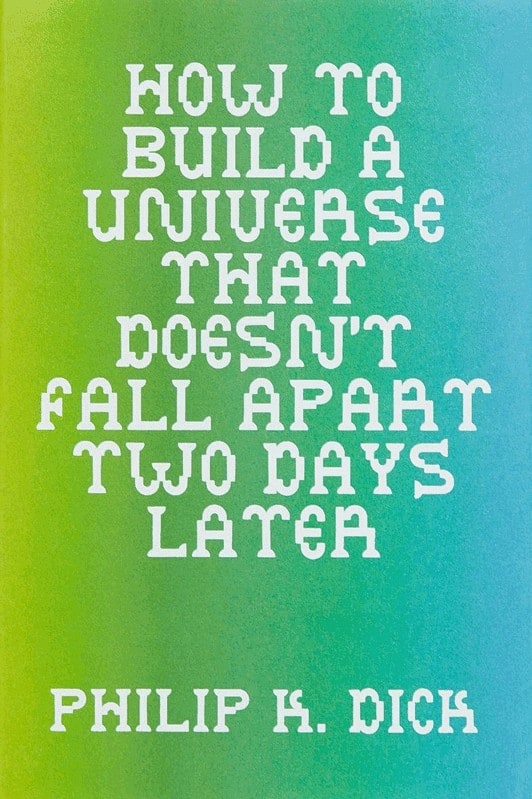
In my opinion, science fiction novels don’t receive enough attention. Even though I enjoy a good space odyssey, I am mostly interested in the worlds that science fiction authors create. When you read about them, it almost feels as though they were reporters. Philip K. Dick, one of my favorite writers, said in an interview that they may be writing the truth, but they don’t yet know it.
I am interested in the philosophy and the speculative futures. As a reader, you are drawn into a totally different society as if you were there. You gain insight into different beliefs that one could not otherwise imagine, and they are still relevant.
My favourite story is from 1953 but is still relevant: The Variable Man (from The Collected Stories of Philip K. Dick, Volume One).
The story takes place in the 22nd century, during a cold war of galactic proportions. Terra (Earth) is trapped in its own solar system, surrounded by the aging but still powerful Centauran Empire. Decisions of war and peace are no longer made by humans, but by the “SRB” machines – colossal computers that calculate the statistical probability of victory based on an endless stream of data.
Security Commissioner Reinhart is waiting for the odds to tip in Earth’s favor to launch a final, devastating strike using a new “faster-than-light” bomb called Icarus. However, a freak accident in a time-travel experiment drags a man from the year 1913 into this highly calculated future: Thomas Cole, a simple “Fixit” man with a knack for repairing anything with his hands.
Thomas Cole is the “Variable Man.” Because he operates on intuition and manual skill rather than programmed logic, the SRB machines cannot factor him into their equations. His mere presence causes the computers’ certainties to vanish into a blank void. As the war begins, both sides realize that this one man, who knows nothing of their advanced science, might be the only force capable of changing a predetermined destiny – or destroying it entirely. The variable man manages to turn the odds, together with Margaret Duffe and Peter Sherikov.
What advice would you give other women in tech?
My advice is to embrace the role of the ‘facilitator’ early on. In tech, we often feel pressured to prove our technical worth every single day. But your real power as you grow into senior roles is your ability to see the bigger picture, to connect the dots between the user, the business, and the development team.
And what advice would you give women not yet working in tech that want to enter the field?
Tech is so much broader than just writing code. My advice is to look at the “connective tissue” of the industry. We desperately need people in Project Management, and Education who actually understand the tech world but bring a human-centric perspective. If you are coming from a different field, don’t hide your background, use it as your Unique Selling Point. Whether you have a pedagogical background or a logistical one, your outsider perspective is exactly what’s needed to break through the echo chambers of product development. Tech has to translate human needs into digital structures.