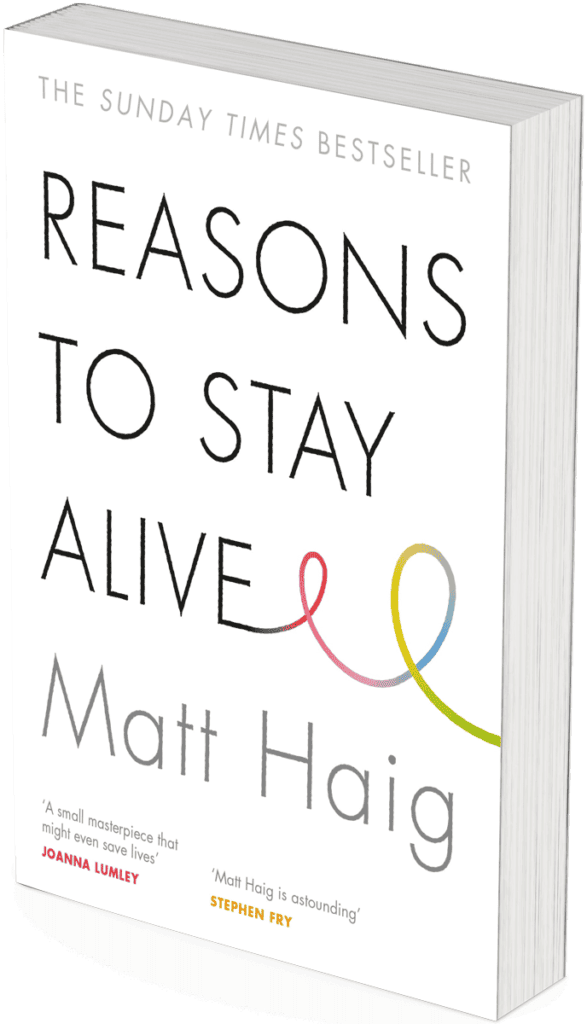

Reasons to Stay Alive is a memoir about depression, anxiety and recovery that speaks directly to people who struggle and those who want to support them. Matt Haig describes his own mental health crisis in his twenties, when panic disorder and depression made everyday life feel unmanageable, and traces the slow, non-linear process of finding stability again.
Rather than presenting a dramatic “before and after” story, the book stays close to lived experience. Haig writes in short chapters, lists and reflections that mirror how mental illness disrupts concentration and time. This structure makes the book accessible even when reading feels difficult. Alongside personal narrative, he includes practical observations about medication, therapy, work pressure, social expectations and the unhelpful myths surrounding happiness and success.
A key strength of the book is its language. It gives readers words for experiences that are often hard to articulate, which is one reason it has been widely used in workplaces and educational contexts. The focus is not on productivity or performance, but on safety, honesty and staying connected. Haig repeatedly underlines that mental health struggles are not personal failures and that recovery does not mean returning to a previous version of oneself.
For organisations, the book offers more than empathy. It helps normalise conversations about mental health, encourages early support and shows why simple, consistent signals of care matter. Its core message is quiet but durable: when people feel able to speak openly about how they are doing, they are more likely to remain engaged, supported and included.
About the Authors
Matt Haig is a British writer and journalist whose work spans fiction, non-fiction and children’s literature. After experiencing a severe mental health crisis in his twenties, he began writing openly about depression and anxiety, becoming one of the most widely read contemporary voices on mental wellbeing.
His non-fiction work focuses on mental health, modern life and the pressures created by constant comparison, speed and expectation. In addition to Reasons to Stay Alive, he has written several books exploring similar themes from different angles, including the relationship between technology, culture and emotional resilience. His fiction has been translated into many languages and adapted for stage and screen.
Haig’s writing is known for its clarity and accessibility. He avoids clinical jargon and self-help formulas, instead combining personal experience with cultural observation. His work is frequently referenced in discussions about mental health awareness in education, media and the workplace.